
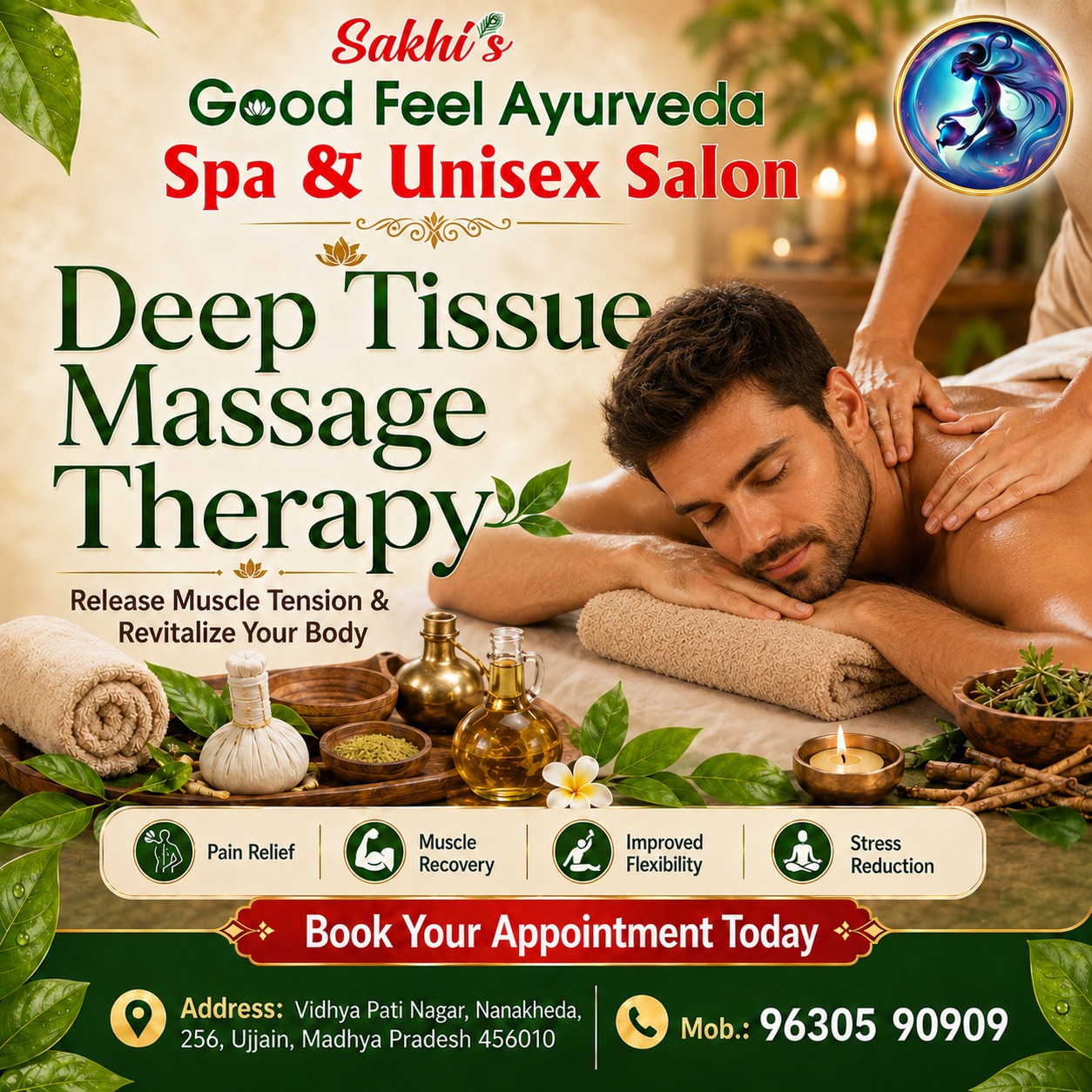
Deep Tissue Massage Therapy in Ujjain for Muscle Relaxation and Better Mobility
Muscle tightness, body stiffness and physical fatigue can make routine activities uncomfortable. Long working hours, repeated movements, strenuous exercise, poor posture and limited recovery time may gradually create tension in deeper muscle layers. A relaxing surface massage may feel soothing, but persistent tightness sometimes requires a more focused technique.
Professional Deep Tissue Massage Therapy in Ujjain uses slow movements and controlled pressure to work on deeper muscles and connective tissues. The pressure is adjusted according to the person’s comfort, sensitivity and physical condition. The objective is not to cause pain but to address tight areas carefully and support a greater sense of physical ease.
Good Feel Ayurveda Spa & Unisex Salon offers deep tissue massage sessions for individuals seeking a structured and personalised wellness experience in a calm environment.
Deep tissue massage therapy is a focused massage technique that uses gradual pressure and slow strokes to work on deeper layers of muscles and surrounding connective tissue. It differs from a gentle relaxation massage because the therapist spends more time addressing specific areas of tightness.
The technique may involve:
The therapist may use hands, fingers, knuckles, forearms or elbows depending on the body area and the pressure required. However, every movement should remain controlled and responsive to the client’s comfort.
People often search for a deep tissue massage centre in Ujjain when they experience recurring muscle tension, physical fatigue or stiffness after work and exercise.
The therapy may be considered by:
Deep tissue massage is a wellness service rather than a substitute for medical diagnosis. Severe pain, recent injury, swelling or neurological symptoms should first be evaluated by a qualified healthcare professional.
A session may focus on one area or include several parts of the body according to the client’s needs.
Desk work, prolonged mobile use, driving and stress can create tightness around the neck and upper shoulders. Controlled massage may help relax overworked muscles in this region.
Back muscles may become tired because of prolonged sitting, lifting activities or limited movement. Deep tissue back massage in Ujjain can focus on tense areas while avoiding direct pressure over the spine.
Repeated typing, lifting, sports or manual work can cause tightness in the forearms and upper arms. Targeted massage may help the muscles feel more relaxed.
Long periods of sitting can contribute to tightness around the hips. These muscles are important for walking, standing and general lower-body movement.
People who exercise, stand for long hours or travel frequently may experience tired legs. Massage can be adapted to the quadriceps, hamstrings and calf muscles.
Foot muscles carry body weight throughout the day. Focused pressure may provide a soothing experience after prolonged walking or standing.
Responses to massage vary between individuals. Some people experience immediate relaxation, while others notice gradual improvement after their muscles recover from the session.
Possible benefits may include:
A professional body massage therapy in Ujjain should be customised rather than performed with the same pressure for every client.
Muscles may become tight when they remain in the same position for long periods or repeatedly perform the same activity. Emotional stress can also contribute to involuntary tightening around the shoulders, neck and back.
During a deep tissue session, the therapist works gradually rather than applying maximum pressure immediately. Starting slowly allows the muscles to warm up and helps the therapist identify areas that feel particularly tense.
Communication is important throughout the session. Clients should report sharp pain, numbness, tingling or excessive discomfort immediately. Pressure can then be reduced or the technique modified.
Exercise challenges muscles and supports physical fitness, but recovery is equally important. After demanding activity, muscles may feel tired, stiff or heavy.
A suitable deep tissue massage for muscle recovery in Ujjain may help fitness enthusiasts relax tight muscle groups between training sessions. The treatment can focus on areas that receive repeated load, such as the calves, thighs, shoulders or back.
Massage should not be performed aggressively over a recent tear, severe swelling or suspected injury. In such situations, medical or physiotherapy evaluation is more appropriate.
Both treatments can be soothing, but their methods and focus differ.
A relaxation massage generally uses:
Deep tissue massage usually involves:
Clients seeking gentle calmness may prefer a relaxation massage. Those wanting focused attention on muscular tightness may choose professional deep tissue massage in Ujjain.
Knowing what to expect can help clients feel more comfortable before their appointment.
The therapist may ask about areas of tightness, previous injuries, current discomfort, preferred pressure and general health. This information helps make the session more suitable.
The client is guided to lie comfortably on the massage table. Proper draping is maintained, with only the area being treated uncovered.
The session generally begins with lighter strokes to warm the muscles. Applying firm pressure immediately may feel uncomfortable and can cause unnecessary soreness.
Pressure is increased gradually according to the client’s comfort. The therapist may spend additional time on areas such as the shoulders, lower back, hips or legs.
The client can request lighter or firmer pressure at any time. A good session depends on communication, not silent endurance.
The therapist may suggest resting, drinking water and avoiding intense exercise immediately after a demanding session.
Deep tissue massage can feel intense when the therapist works on a tight muscle, but it should not create sharp, unbearable or alarming pain. The idea that stronger pain always means better results is incorrect.
A suitable pressure level may feel:
The therapist should reduce pressure when the muscles resist strongly or the client becomes uncomfortable. Excessively forceful massage can create unnecessary soreness and reduce the overall benefit of the experience.
Mild tenderness may occur after a deep tissue massage, particularly when the body is not accustomed to firm pressure. This sensation generally differs from injury-related pain and may feel similar to post-exercise muscle soreness.
After the session, clients may benefit from:
Severe pain, significant swelling, bruising or symptoms that continue should not be ignored.
Deep tissue massage may not be suitable for everyone. Clients should disclose relevant medical conditions, medicines, recent procedures and injuries before treatment.
A massage may need to be avoided, postponed or modified in cases involving:
Medical clearance may be appropriate when there is uncertainty about safety.
Technique, hygiene and client comfort significantly affect the quality of a massage session. Professional treatment is more than applying firm pressure.
A reliable massage therapy centre in Ujjain should provide:
The therapist should never promise to cure medical conditions through massage.
Simple preparation can make the session more comfortable.
Before visiting:
It is helpful to identify the main reason for booking, whether that is shoulder tension, tired legs, post-workout stiffness or full-body relaxation.
There is no universal schedule. Frequency depends on lifestyle, muscle condition, activity level, pressure tolerance and wellness goals.
Some clients may choose an occasional session after periods of physical strain, while others may prefer regular appointments. Sessions should not be scheduled so frequently that the muscles remain persistently sore.
A therapist can suggest a reasonable interval after observing how the body responds to the first session.
Professional massage services can be suitable for adults of different lifestyles when performed with clear communication, privacy and appropriate boundaries.
People may book deep tissue massage in Ujjain for:
The treatment should always be adapted to the individual rather than based only on age or gender.
Session duration varies according to the selected service and treatment areas. A focused massage may be shorter, while a full-body session generally requires more time.
It may support relaxation and recovery from general post-exercise tightness. However, suspected injuries, severe swelling or sharp pain should be medically evaluated before massage.
Comfortable clothing is recommended when arriving at the centre. During treatment, professional draping should be maintained, and only the area being massaged should be uncovered.
Yes, but first-time clients may prefer moderate pressure initially. The therapist can gradually adjust the intensity based on comfort and muscle response.
Ongoing muscle tightness can affect comfort, energy and freedom of movement. A professionally planned session can provide focused relaxation while allowing the pressure and technique to be adjusted according to your preferences.
For a calming and personalised Deep Tissue Massage Therapy in Ujjain, connect with Good Feel Ayurveda Spa & Unisex Salon. Book Your Appointment Today and give your body the focused care, relaxation and recovery time it deserves.
| Tags: | #Deep Tissue Massage Therapy in Ujjain |


